Black history does not end on February 28.
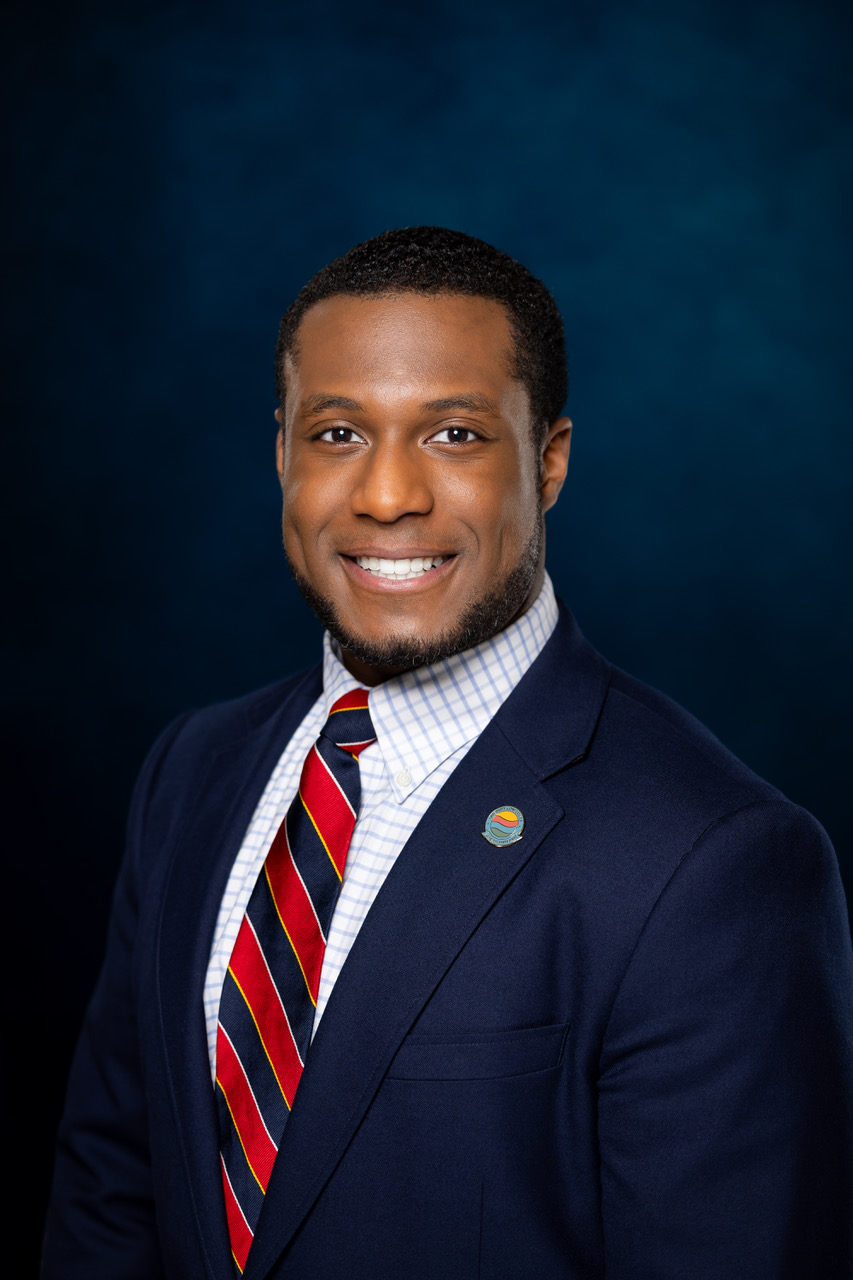
In this powerful reflection, Student Bar Association President and former BLSA President Joseph L. Pullen, Jr. reminds us that Black history is not confined to a single month. It is a living continuum — a journey shaped by endurance, faith, service, and responsibility.
Drawing from his family’s roots in rural Virginia during the era of sharecropping and Jim Crow, Pullen reflects on the generational resilience that carried his grandparents through systems designed to constrain them. Their belief in work, education, advocacy, and dignity laid the groundwork for future generations.
Through the lens of The Odyssey, he reminds us that progress is rarely a straight path. It is marked by storms, resistance, detours, and perseverance.
Black history, he writes, is not merely a collection of events. It is the living memory of how civil rights were secured, reinforced, and defended — often at great personal cost. It is also a reminder that those protections must continue to be studied, preserved, and advanced.
At Appalachian School of Law, this reflection challenges us to consider what responsibility looks like today — as students, as advocates, and as stewards of the law.
We invite you to read his full reflection below.
What Black History Means To Me
Every journey begins somewhere.
In many ways, when I reflect on what Black History means to me, I think of Odysseus in The Odyssey—a man whose voyage was not defined merely by distance, but by endurance. His story was not about a straight path home. It was about storms, resistance, detours, and the quiet resolve to continue moving forward even when the horizon refused to clear.
To answer what Black History means to me, I must begin with where my own journey began.
My roots in the Commonwealth of Virginia run deep. I am the grandchild of two families born into sharecropping in rural Southampton County and rural Caroline County during the 1930s and 1940s—places where cotton and tobacco were still picked by hand well into the 1950s and 1960s. Their beginnings were not framed by comfort or ease, but by labor, discipline, and faith in something greater than their present circumstances.
Like Odysseus navigating uncertain waters, my grandparents lived in an era when Jim Crow laws and segregation were not relics of history but the enforced order of the day. Yet even within systems designed to constrain them, they carried an unshakable belief in work, education, advocacy, and dignity. They refused to allow the boundaries placed around them to define the limits of their vision.
Service became their compass. They served their communities and, in times of war, served their country—fighting for freedoms abroad that were not fully extended to them at home. They pursued education when doors were narrow and opportunities scarce. They labored not only for survival, but for progress. In their own way, they participated in the broader civil rights struggle—not as a headline, but as a lived necessity. And in doing so, they prepared the ground for generations that would follow.
When many hear “Black History,” they think immediately of the Civil Rights Movement. But history is not simply a collection of events—it is a continuum of endurance. It invites us to ask a foundational question: What are civil rights?
Today, institutions such as the United States Court of Appeals for the Fourth Circuit define civil rights as the fundamental protections and freedoms guaranteed by the Constitution and laws of the United States—ensuring equal treatment and protection under the law. That definition, shaped significantly by the Civil Rights Act of 1964, reflects progress forged through sacrifice. Yet it also prompts reflection: What does equal protection require of us now? How do we preserve it?
Civil rights are not confined to a single narrative or community. They safeguard voting rights, protect women in the workplace, recognize LGBTQ individuals, and ensure accessibility for persons with disabilities. They are embedded in legal frameworks such as Title VII and Title IX. They represent not a narrow chapter of American history, but the structural beams of our democratic house.
Black History, to me, is the living memory of how those beams were reinforced—often at great personal cost.
I am, in many respects, the realization of prayers whispered in fields where wages were meager but faith was abundant. I have been afforded opportunities my grandparents could scarcely have imagined: to attend private institutions of higher education; to serve as the second African American President of a Student Bar Association; and to study the very legal frameworks that once constrained their daily lives.
Yet, as in The Odyssey, arrival is rarely the end of the journey.
Even now, as I pursue the study of law, I am reminded that progress does not eliminate adversity—it refines our response to it. There are moments when the winds feel less like gentle currents and more like crosswinds. Moments when navigating forward requires a quiet resilience rather than visible triumph. Moments when one must remember that storms do not negate the journey; they are often proof that the voyage matters.
And so I continue.
Black History reminds me that I do not walk alone. In the spirit of Maya Angelou, when I enter a room, I carry with me everyone who has ever believed in me—my parents, grandparents, ancestors whose names history may not record but whose sacrifices history cannot erase. I stand not simply as an individual achievement, but as a generational continuum.
Like Odysseus, my ancestors understood that perseverance is not loud. It is steady. It is disciplined. It is forward-moving even when unseen obstacles linger beneath the surface.
Black History means honoring that legacy.
It means recognizing that civil rights are interconnected—that when one protection weakens, the integrity of all is threatened.
It means understanding that progress is not self-sustaining; it must be guarded, studied, and advanced.
Above all, Black History means responsibility.
Responsibility to steward the sacrifices of those who came before me.
Responsibility to endure present trials with dignity.
Responsibility to ensure that the seeds planted in struggle continue to bear fruit in justice.
The journey continues.
And I intend to see it through.
In Service & Truth,
Joseph L. Pullen, Jr.
Student Bar Association — President